
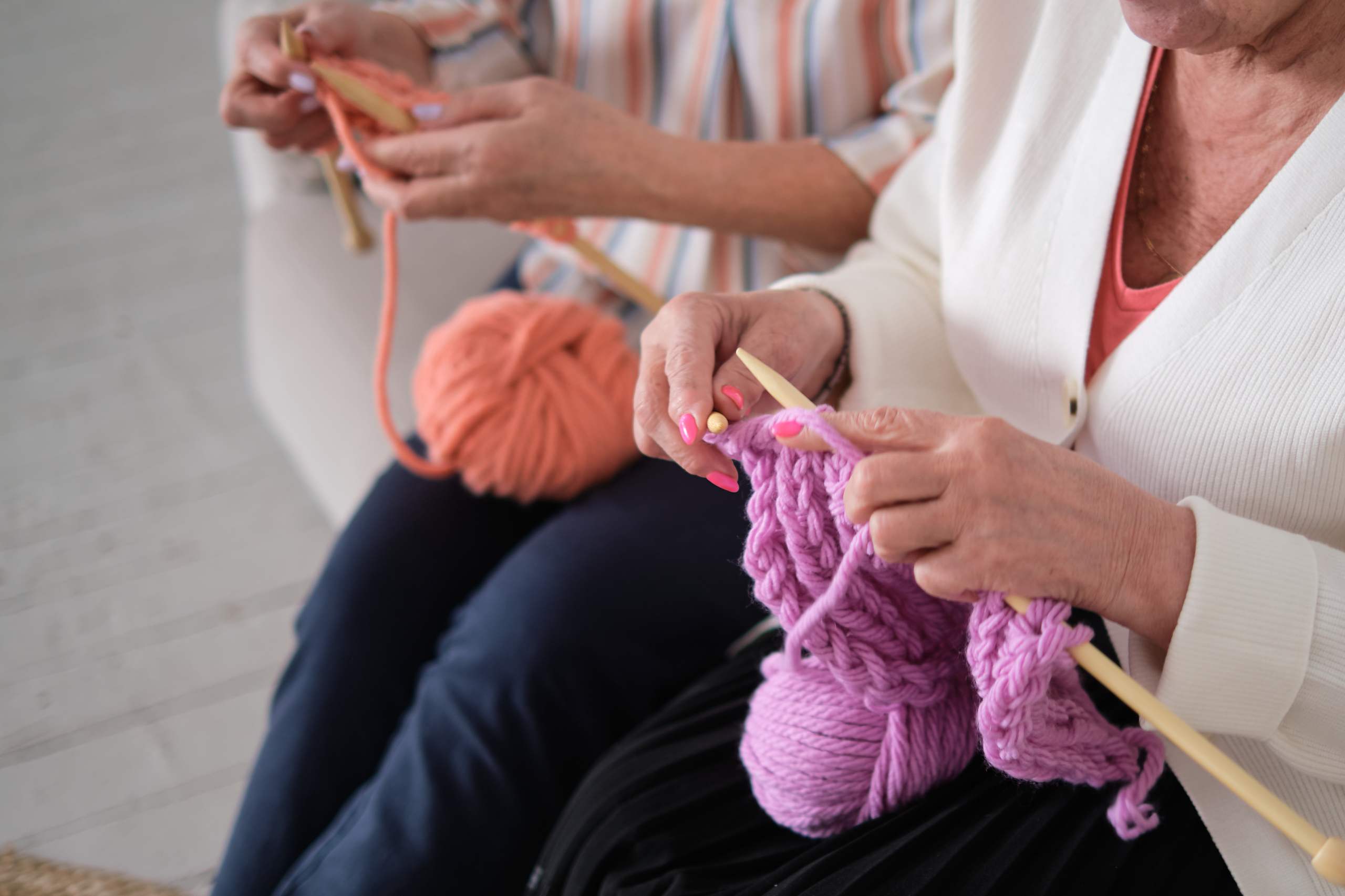
How to Select a Good First Knitting Project.
Choosing a good first knitting project can be tough. If you go with something that’s too difficult, you’ll be frustrated….
Choosing a good first knitting project can be tough. If you go with something that’s too difficult, you’ll be frustrated. If you go with something too easy, you won’t be challenged, and you’ll lose interest.
For your first knitting project, you want a challenge that isn’t quite as daunting as a boss battle in a video game.
Think about your time constraints
Before you pick a pattern, consider how much time you’re willing to spend learning.
If you’ve never knitted before, choose a project that requires learning just a handful of techniques. Your goal should be to gain some understanding of how knitting works. It shouldn’t be to create the most amazing thing possible.
Finishing even a simple item will provide a boost of confidence and encouragement to keep going.
Consider a smaller project size
Some projects require a lot of time for repetitive knitting. Although making blankets or sweaters may be your end goal, they aren’t necessarily ideal choices for your first knitting project.
By choosing a smaller item, you’ll have time to practice new techniques, but you’ll also be able to finish the project relatively quickly.
Examples of projects suitable for a beginner knitter include:
- Simple scarves
- Headbands
- Small accessories
- Simple dishcloths
- Basic hats
This allows you to practice your techniques without investing in a large project that takes weeks to complete.
Look for simple construction
When choosing a pattern, take note of its construction.
If the project is mostly knit and purl stitches, it will be easier to follow than a pattern that incorporates complex shaping, intricate stitch patterns, or multicolor designs.
Limit the techniques needed
Don’t expect to learn everything about knitting on your first try.
Instead, choose a pattern that uses only a few key techniques, such as:
- Casting on
- Knitting and purling stitches
- Basic increases or decreases
- Binding off
Once you’re comfortable with those, you can move on to incorporating more complex techniques.
Select yarn that is easy to handle
Yarn itself can be either helpful or hinder your progress.
A smooth, medium-weight yarn is generally a good choice for beginners because it allows you to easily see each stitch. Yarn that’s very thin, fuzzy, slippery, or has significant texture may make it harder to spot errors.
Also consider the color of your yarn; extremely dark yarns can make it harder to see the stitches as you’re learning.
Find needles that suit your hands
You can choose from various sizes and types of knitting needles, and the feel can differ quite a bit.
You’ll want to select a size that matches the weight of your yarn and a material that feels comfortable to you. There’s no one perfect needle for all knitters.
What matters is that you can maneuver the needles without a struggle.
Pick something you’d like to make
The best beginner knitting project is one you actually want to create.
If you love scarves, knit a scarf. If you prefer accessories, make a small wearable item.
It’s much easier to repeat actions when you’re genuinely interested in the outcome. Learning to knit involves repetition, so enjoy the process.
Don’t just choose for the sake of difficulty
You don’t want to choose a project simply because it looks cool.
A complex project can present too many techniques at once, which makes it harder to grasp what you’re doing. There will always be time for more complicated projects later.
Read through the pattern first
Once you find a project you like, read through the entire pattern.
Check the recommended yarn, needle size, gauge, finished measurements, and techniques.
If you come across multiple unfamiliar terms or techniques, you might want to find a less challenging project for your first attempt.
Allow yourself to make mistakes
Your first project probably won’t be perfect, and that’s okay.
Stitches might look uneven, there might be some small mistakes, and the final edge might not be as clean as you’d like. These are all normal parts of learning.
The goal is to finish with a better understanding of knitting than you started with. Each project will teach you something that the next one builds on.
Conclusion
Selecting your first knitting project is about striking a balance between challenge and fun.
Opt for a small, manageable size, use easy-to-handle materials, find a straightforward pattern, and pick a project you genuinely want to create. Once you complete your first project, you’ll have more than a handmade item, you’ll have a base for everything you knit moving forward.
One simple stitch could be the start of a very long creative adventure.